Henan Guoxin Machinery Manufacturing Co., Ltd!
Henan Guoxin Machinery Manufacturing Co., Ltd!


What raw materials are suitable for continuous carbonization equipment?
author: Admin Release time: 26-04-10
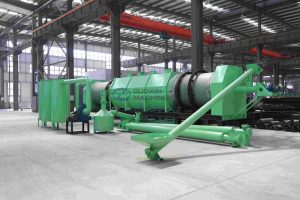
Continuous carbonization equipment is the core equipment for biomass resource utilization, widely used in agricultural and forestry waste treatment. When purchasing such equipment, many users are most concerned about: What raw materials are suitable for continuous carbonization equipment? In fact, it is highly versatile—any carbon-containing materials such as biomass or agricultural and forestry waste can be carbonized as long as they meet basic compatibility requirements. Below is a detailed breakdown.
continuous carbonization equipment
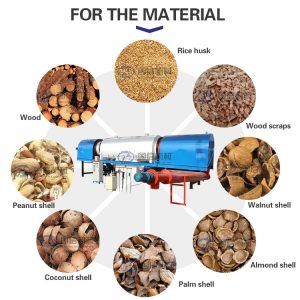
These raw materials are highly adaptable, yield high charcoal, and require no complex pretreatment. They are the mainstream choices for continuous carbonization equipment, widely used in large-scale production.
Coconut shells and palm shells have high carbon content and low ash content. The charcoal produced from them is of excellent quality, with a yield of 35%-45%. They are widely used in activated carbon production, barbecue charcoal processing, and wastewater adsorption.
Almost all common nutshells can be used for continuous carbonization, with no special treatment needed—just dry them before use. Examples include walnut shells, apricot shells, peach shells, olive shells, coffee shells, camellia shells, and hawthorn shells.
These raw materials are readily available and low-cost. After carbonization, they can be made into activated carbon, soil conditioners, and barbecue charcoal, suitable for waste recycling in agricultural and forestry areas and food processing plants.
Various wastes from wood processing are high-quality raw materials, including sawdust, shavings, and wood flour. Common wood types include pine, fir, poplar, and hardwoods.
These wastes are produced in large quantities and easy to collect, mainly from furniture factories, board mills, and wood processing plants. Carbonization turns them into charcoal and charcoal powder for barbecues, heating, industrial metallurgy, and other uses, realizing waste resource utilization.
Bamboo carbonization technology is well-developed. Continuous carbonization equipment is fully compatible with bamboo shavings, bamboo chips, bamboo joints, old bamboo products (e.g., bamboo baskets, mats), and bamboo processing waste. Bamboo charcoal has well-developed pores and strong adsorption capacity, suitable for bamboo charcoal products, air purification, water filtration, and large-scale processing in bamboo-producing areas.
Branches, bark, and dead branches from garden pruning, as well as wood chips and scraps from furniture factories and woodworking workshops, can be directly used in continuous carbonization equipment.
Various crop straws, after drying, are also suitable raw materials, including rice straw, wheat straw, corn straw, cotton stalks, peanut shells, rice husks, and soybean straw.
Note that straw must be pre-dried to meet moisture standards to avoid coking and unstable gas production during carbonization. Carbonized straw can be made into straw charcoal for soil improvement and biomass fuel.
Various organic waste residues from industrial production can be recycled via continuous carbonization equipment, including mushroom residue, medicinal residue, distiller’s grains, furfural residue, and sugar residue.
Raw Materials for Continuous Carbonization Equipment
Not all carbon-containing materials can be used directly. To ensure stable continuous production, improve charcoal yield and quality, and avoid equipment failure, the following three conditions must be met:
– Moisture Content: Raw materials must have a moisture content of ≤15%-20%. If too wet, pre-dry them with drying equipment; otherwise, incomplete carbonization, unstable gas production, or even furnace blockage may occur.
– Size: Raw materials should be as uniform as possible. Large materials (e.g., big coconut shells, thick branches) need to be crushed first, generally to within 20mm, to ensure even heating and consistent carbonization.
– Composition: Avoid large amounts of high-oil, high-sugar, or high-resin materials (e.g., tung oil wood, high-resin wood). These materials tend to melt, stick to walls, and coke during carbonization, clogging the screw conveyor and disrupting production.
Continuous Carbonization Equipment
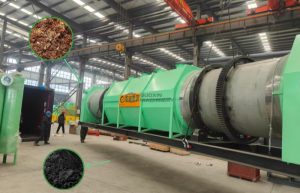
If you are unsure whether your raw materials are suitable, or if you want to select the right continuous carbonization equipment based on raw material type and output, please contact us directly. Guoxin Machinery’s professional team will provide a free raw material compatibility assessment and customize continuous carbonization equipment solutions, helping you achieve resource utilization and improve production efficiency.
Related news
Is it Profitable to Do Coconut Charcoal Business in Indonesia?
26-06-02
How Continuous Carbonization Furnaces Turn Biomass Waste Into Profitable Charcoal?
26-05-15
What raw materials are suitable for continuous carbonization equipment?
26-04-10
Characteristics and working principle of ball press machine
26-03-28

Tel


Henan Guoxin Machinery Manufacturing Co., Ltd
E-mail:Alisa@lantianmachine.com
Tel:0086 17596531123
News Center
News